| Results by Title # A B C D E F Thousand H I G L M N O P Q R Southward T U V W Y Z 415 books about American poesy and 31 start with A 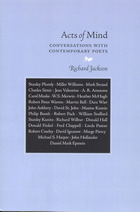 | Acts of Mind: Conversations with Contemporary Poets
Richard Jackson
University of Alabama Press, 1984
Library of Congress PS325.J3 1983 | Dewey Decimal 811.5409 A good poem is, to borrow from Wallace Stevens, a "poem of the mind in the deed of finding / What will suffice" ("Of Mod Verse"), a poem of the listen that both thinks and feels Acts of Mind grew out of interviews conducted past the author for Poetry Miscellany. The aim of which was to help develop a method for talking most the work of contemporary poets. The poets whose views appear in this volume represent a fair cantankerous-department of the more of import tendencies and impulses to be found in contemporary poetry and poetics. Expand Description | 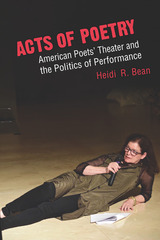 | Acts of Poetry: American Poets' Theater and the Politics of Performance
Heidi R. Bean
University of Michigan Press, 2019
Library of Congress PN4151.B43 2019 | Dewey Decimal 811.0209054 American poets' theater emerged in the postwar flow aslope the rich, performance-oriented poetry and theater scenes that proliferated on the makeshift stages of urban coffee houses, shared apartments, and undercover theaters, yet its significance has been largely overlooked past critics. Acts of Verse shines a spotlight on poets' theater's primal groups, practitioners, influencers, and inheritors, such equally the Poets' Theatre, the Living Theatre, Gertrude Stein, Bunny Lang, Frank O'Hara, Amiri Baraka, Carla Harryman, and Suzan-Lori Parks. Heidi R. Edible bean demonstrates the importance of poets' theater in the development of twentieth-century theater and operation poetry, and specially evolving notions of the audience'southward role in performance, and in narratives of the relationship between performance and everyday life. Drawing on an all-encompassing archive of scripts, product materials, personal correspondence, theater records, interviews, manifestoes, editorials, and reviews, the book captures critical assessments and behind-the-scenes discussions that enrich our agreement of the intertwined histories of American theater and American poetry in the twentieth century. Expand Description |  | African-American Verse of the Nineteenth Century: AN Anthology
Edited past Joan R. Sherman
University of Illinois Printing, 1992
Library of Congress PS591.N4A35 1992 | Dewey Decimal 811.3080896073 In this bestselling companion to her pioneering written report, Invisible Poets, Joan Sherman continues to brand new generations aware of the "invisible" legacy of nineteenth-century blackness American poesy. The 171 poems hither, past thirty-five men and women, take been transcribed
from beginning editions and are annotated in detail.
Expand Clarification | 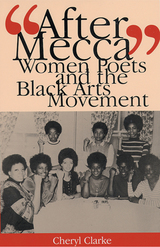 | "After Mecca": Women Poets and the Blackness Arts Movement
Clarke, Cheryl
Rutgers Academy Printing, 2004
Library of Congress PS310.N4C48 2005 | Dewey Decimal 811.509896073 The politics and music of the sixties and early seventies take been the subject of scholarship for many years, just information technology is only very recently that attending has turned to the cultural production of African American poets. In "After Mecca," Cheryl Clarke explores the human relationship betwixt the Blackness Arts Movement and black women writers of the period. Poems past Gwendolyn Brooks, Ntozake Shange, Audre Lorde, Nikki Giovanni, Sonia Sanchez, Jayne Cortez, Alice Walker, and others nautical chart the emergence of a new and distinct black poesy and its relationship to the black customs'due south struggle for rights and liberation. Clarke also traces the contributions of these poets to the development of feminism and lesbian-feminism, and the legacy they left for others to build on. She argues that whether black women poets of the time were writing from inside the movement or writing against it, virtually all were responding to it. Using the trope of "Mecca," she explores the ways in which these writers were turning away from white, western lodge to create a new literacy of blackness.
Provocatively written, this book is an of import contribution to the fields of African American literary studies and feminist theory. Expand Clarification | 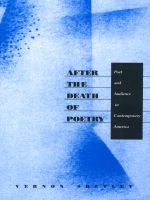 | Afterward the Death of Poetry: Poet and Audition in Gimmicky America
Vernon Shetley
Knuckles University Press, 1993
Library of Congress PS323.5.S53 1993 | Dewey Decimal 811.5409 In this deft analysis, Vernon Shetley shows how writers and readers of poetry, operating nether very different conventions and expectations, have drifted apart, stranding the once-vital poetic enterprise on the afar margins of contemporary culture. Along with a articulate agreement of where American verse stands and how it got at that place, Afterward the Death of Poetry offers a compelling set of prescriptions for its future, prescriptions that might enable the art to regain its lost stature in our intellectual life.
In exemplary case studies, Shetley identifies the very different ways in which three postwar poets—Elizabeth Bishop, James Merrill, and John Ashbery—try to restore some of the challenge and risk that characterized modernist poetry's relation to its starting time readers. Sure to be controversial, this cogent analysis offers poets and readers a clear sense of direction and purpose, and then, the promise of reaching each other again. Expand Description |  | Albatross
Dore Kiesselbach
University of Pittsburgh Press, 2017
Library of Congress PS3611.I4488A6 2017 | Dewey Decimal 811.6 Dore Kiesselbach's second collection Albatross views the events of September 11th as a physicist might examine loftier-energy particles in a supercollider. In the book'southward central section, Kiesselbach, who worked three blocks from the Globe Trade Center and was an eyewitness, deconstructs the cultural hyperbole of that extraordinary solar day in a series of intimate portraits that dovetail elsewhere with a wider exam of violence in the everyday lives of individuals, families, and nations. While neither blaming victims, nor succumbing to despair, the volume urges reflection on the roles we each play in our own harm. Like its namesake, the human-powered aircraft flown across the English language Aqueduct in 1979, Albatross invites readers to push forward into headwinds—public and private—and make for the far shore.
Expand Description | 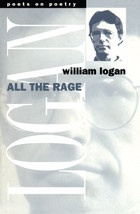 | All the Rage
William Logan
University of Michigan Press, 1998
Library of Congress PS323.5.L64 1998 | Dewey Decimal 811.509 William Logan has been called the almost dangerous poetry critic since Randall Jarrell. All the Rage collects his early critical works, including reviews and poesy chronicles, a long essay on Auden'southward imagery, an unpublished essay on "The Prejudice of Aesthetics," as well every bit a recent interview. A critic of uncompromising passions, his readings of modern poetry are irritating, intimate, severe, and luminous. Banned by some publications, his criticism has violently opposed the etiquette of praise that has silenced strong opinion among poesy circles.
Logan was among the outset critics to review a generation of poets now in creative maturity, and his comments on the early works of Jorie Graham, Gjertrud Schnackenberg, and the tardily Amy Clampitt prove the enthusiasm of fresh discovery. But he is no respecter of former reputation, as his reviews of John Ashbery and Robert Penn Warren demonstrate. In total, his criticism considers virtues with their defects and always speaks its writer's mind. Some contemporary poetry has had few meliorate friends, and some few greater enemies, than William Logan.
William Logan is the author of Lamentable-Faced Men, Difficulty, Sullen Weedy Lakes, and Vain Empires. He is Alumni/ae Professor of English, Academy of Florida.
Expand Description | 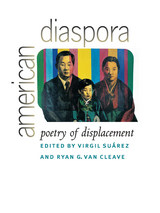 | American Diaspora: Poetry of Displacement
Virgil Suarez
University of Iowa Press, 2001
Library of Congress PS595.E54A45 2001 | Dewey Decimal 811.009353 Diaspora constitutes a powerful descriptor for the modernistic condition of the contemporary poet, the spokesperson for the psyche of America. The poems in American Diaspora: Verse of Deportation focus on the struggles and pleasures of creating a domicile-concrete and mental-out of displacement, exile, migration, and alienation. To fully explore the concept of diaspora, the editors have broadened the telescopic of their definition to include non simply the physical act of moving and immigration only likewise the spiritual and emotional dislocations that tin occur-as for Emily Dickinson and other poets-even in a life spent entirely in i location. 5 Expand Description |  | American Elegy: The Poetry of Mourning from the Puritans to Whitman
Max Cavitch
University of Minnesota Press, 2007
Library of Congress PS309.E4C38 2007 | Dewey Decimal 811.0093548 The well-nigh widely proficient and read form of verse in America, "elegies are poems nearly being left behind," writes Max Cavitch. American Elegy is the history of a diverse people'south poetic feel of mourning and of bloodshed'southward profound challenge to creative living. By telling this history in political, psychological, and aesthetic terms, American Elegy powerfully reconnects the study of early American poetry to the broadest currents of literary and cultural criticism.Cavitch begins past considering eighteenth-century elegists such as Franklin, Bradstreet, Mather, Wheatley, Freneau, and Annis Stockton, highlighting their disobedience of boundaries—between public and individual, male and female person, rational and sentimental—and demonstrating how closely intertwined the work of mourning and the work of nationalism were in the revolutionary era. He and so turns to elegy's adaptations during the market-driven Jacksonian historic period, including more obliquely elegiac poems like those of William Cullen Bryant and the popular child elegies of Emerson, Lydia Sigourney, and others. Devoting unprecedented attending to the early African-American elegy, Cavitch discusses poems written by free blacks and slaves, as well as white abolitionists, seeing in them the development of an African-American genealogical imagination. In improver to a major new reading of Whitman's great elegy for Lincoln, "When Lilacs Concluding in the Dooryard Blossom'd," Cavitch takes up less familiar passages from Whitman likewise as Melville's and Lazarus'southward poems following Lincoln'south death. American Elegy offers disquisitional and oftentimes poignant insights into the place of mourning in American culture. Cavitch examines literary responses to historical events—such every bit the American Revolution, Native American removal, African-American slavery, and the Civil War—and illuminates united states of loss, hope, desire, and beloved in American studies today.Max Cavitch is assistant professor of English at the Academy of Pennsylvania. Expand Description | 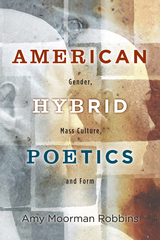 | American Hybrid Poetics: Gender, Mass Civilisation, and Class
Robbins, Amy M
Rutgers Academy Printing, 2014
Library of Congress PS151.R59 2014 | Dewey Decimal 811.0099287 American Hybrid Poetics explores the ways in which hybrid poetics—a playful mixing of disparate formal and aesthetic strategies—have been the driving force in the work of a historically and culturally diverse group of women poets who are part of a robust tradition in contesting the dominant cultural order. Amy Moorman Robbins examines the means in which five poets—Gertrude Stein, Laura Mullen, Alice Notley, Harryette Mullen, and Claudia Rankine—use hybridity equally an implicitly political strategy to interrupt mainstream American language, literary genres, and visual culture, and expose the ways in which mass civilisation in the twentieth and twenty-kickoff centuries has had a powerfully standardizing bear upon on the collective American imagination. By forcing encounters between incompatible traditions—consumer culture with the advanced, depression culture forms with experimental poetics, prose poetry with linguistic subversiveness—these poets join radically competing ideologies and highlight their implications for lived experience. Robbins argues that information technology is precisely considering these poets accept mixed forms that their piece of work has gone largely unnoticed by leading members and critics in experimental poetry circles. Expand Description | 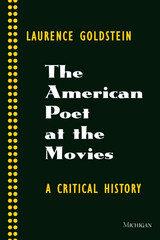 | The American Poet at the Movies: A Critical History
Laurence Goldstein
University of Michigan Press, 1995
Library of Congress PS310.M65G64 1994 | Dewey Decimal 811.5409 The American Poet at the Movies: A Critical History presents a series of case studies that shows how poets perceived the new technology of cinema as a rival threatening to their prestige, but as well as a sister fine art deserving of encouragement. Each chapter places a key poem at the eye and takes upwards the issues arising from the engagement of these two art forms, such as the poets' mixed feelings nigh living in a national culture dominated by visual media. Whether it is Hart Crane writing on Chaplin, Delmore Schwartz on Marilyn Monroe, Frank O'Hara on James Dean, or Louise Erdrich on John Wayne, poets take made sense of their ain fourth dimension past reference to film icons and values shared by all Americans thanks to the dream factory, Hollywood.
As an increasingly popular genre of modern poetry, and one that permits a unique view of this century's dominant art grade, the film poem has needed an explanatory book like this one. As cinema and tv continue to wield extraordinary influence over the lives of all Americans, the efforts of poets to understand the visual civilisation will come up to be appreciated as cardinal to the task of modern and postmodern literature. This critical history is an of import and timely contribution to the study of American literature and American institutions.
"One of the impressive things virtually the book is that while pursuing the seemingly narrow category of poems-near-movies, Goldstein is able to heighten and illuminate virtually all the key issues surrounding the poetry of the flow." - Roger Gilbert, Cornell University
". . . a discerning book, combining criticism and social history. It satisfies scholarly standards while highly-seasoned to general readers." - Philip French, coeditor of the Faber Book of Movie Verse
"In this work, [Goldstein] provides a new manner of looking at American poets, both familiar and neglected. The approach is chronological and thematic, and films are seen from black, gay, Jewish, and feminist likewise as middle-class white perspectives." Library Periodical
Laurence Goldstein is editor of the Michigan Quarterly Review and Professor of English language, University of Michigan.
Expand Description | 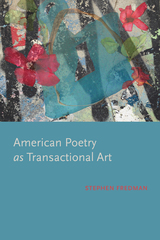 | American Verse equally Transactional Art
Stephen Fredman
Academy of Alabama Press, 2020
Library of Congress PS323.5.F685 2020 | Dewey Decimal 811.509 Explores the ways American poetry engages with visual art, music, fiction, spirituality, and operation art Many people think of verse as a hermetic art, as though poets wrote only about themselves or every bit if the bailiwick of verse were finally merely poesy—its forms and traditions. Indeed much of what constitutes verse in the lyric tradition depends on a stringently controlled point of view and aims for a timeless, intransitive utterance. Stephen Fredman'due south written report proposes a different perspective. American Poetry as Transactional Art explores a salient quality of much avant-garde American poetry that has so far lacked sustained treatment: namely, its office as a transactional fine art. Specifically Fredman describes this role every bit the ways it consistently engages in conversation, talk, correspondence, going beyond the scope of its own subjects and forms—its existential interactions with the exterior world. Poetry operating in this vein draws together images, ideas, practices, rituals, and verbal techniques from around the globe, and across fourth dimension—not to equate them, but to establish dialogue, to invite as many guests as possible to the World Party, which Robert Duncan has chosen the "symposium of the whole." Fredman invites new readers into gimmicky poetry past providing lucid and nuanced analyses of specific poems and specific interchanges between poets and their surround. He explores such topics as poetry'due south transactions with spiritual traditions and practices over the grade of the twentieth century; the impact of Globe State of war 2 on the poetry of Charles Olson and George Oppen; exchanges betwixt poesy and other art forms including sculpture, functioning art, and ambient music; the battle between poetry and prose in the early work of Paul Auster and in Lyn Hejinian's My Life. The epilogue looks briefly at another crucial transactional occasion: teaching American verse in the classroom in a way that demonstrates that it is at the middle of the arts and at the heart of American culture. Expand Description | 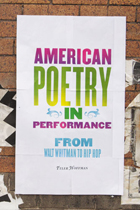 | American Poetry in Operation: From Walt Whitman to Hip Hop
Tyler Hoffman
University of Michigan Press, 2011
Library of Congress PN4151.H64 2011 | Dewey Decimal 811 "Tyler Hoffman brings a fresh perspective to the subject area of operation poetry, and this comes at an splendid time, when there is such a vast interest across the country and around the world in the performance of poetry. He makes important connections, explaining things in a manner that remains provocative, interesting, and accessible."
---Jay Parini, Middlebury College American Poetry in Performance: From Walt Whitman to Hip Hop is the kickoff book to trace a comprehensive history of operation poesy in America, covering 150 years of literary history from Walt Whitman through the rap-meets-poetry scene. It reveals how the performance of poetry is bound up with the functioning of identity and nationality in the modern period and carries its ain shifting cultural politics. This volume stands at the crossroads of the humanities and the social sciences; it is a book of literary and cultural criticism that deals squarely with problems of "operation," a concept that has attained great importance in the disciplines of anthropology and sociology and has generated its own distinct field of performance studies. American Poetry in Performance will be a meaningful contribution both to the field of American poetry studies and to the fields of cultural and performance studies, as information technology focuses on poetry that refuses the status of stock-still artful object and, in its variability, performs versions of race, grade, gender, and sexuality both on and off the page. Relating the operation of poetry to shifting political and cultural ideologies in the U.s., Hoffman argues that the song aspect of public poetry possesses (or has been imagined to possess) the ability to help construct both national and subaltern communities. American Poetry in Functioning explores public poets' confrontations with emergent sound recording and communications technologies as those confrontations shape their mythologies of the spoken discussion and their corresponding notions about America and Americanness. Expand Clarification | 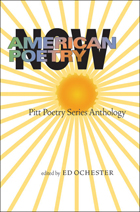 | American Poetry At present: Pitt Poesy Series Anthology
Ed Ochester
Academy of Pittsburgh Press, 2007
Library of Congress PS615.A4248 2007 | Dewey Decimal 811.508 American Poetry Now is a comprehensive collection of the best work from the renowned Pitt Poetry Series. Since its inception in 1967, the series has been a vehicle for America's finest contemporary poets. The series list includes Poet Laureate Billy Collins, Toi Derricotte, Denise Duhamel, Lynn Emanuel, Bob Hicok, Poet Laureate and Pulitzer Prize winner Ted Kooser, Larry Levis, Sharon Olds, Alicia Suskin Ostriker, Virgil Suárez, Afaa Michael Weaver, David Wojahn, Dean Immature, and many others. Throughout its twoscore-yr history, the Pitt Poetry Series has provided a voice for the diversity that is American poetry, representing poets from many backgrounds without allegiance to whatever one school or style. American Verse Now is a true representation of gimmicky American poetry. Ed Ochester, series editor for nearly thirty years, has assembled a quintessential selection-along with biographies and photos, an enlightening introduction, and a suggested list for further reading, all in a highly accessible format.American Poetry Now is a sweeping anthology that will delight poetry fans, students, teachers, and general readers alike. Expand Description | 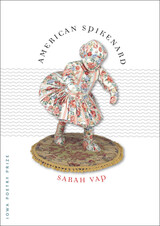 | American Spikenard
Sarah Vap
University of Iowa Printing, 2007
Library of Congress PS3622.A679A44 2007 | Dewey Decimal 811.6 2006 Iowa Verse Prize winner "If anybody decided to phone call themselves a girl / that word would stop." In this laurels-winning volume of authoritative and assertive poems, Sarah Vap embarks on an emotional journeying to the state of America's female children. Questioning, contradicting, radically and restlessly enervating acceptance, she searches for a manner to motion from serious girlhood to womanly dearest. Demonstrating the seriousness of female childhood—which is as dangerous and profound every bit war, economics, and history, that is, as manhood, in her view—Vap reveals the extremes of self-doubt and self-righteousness inherent in beingness a gimmicky American girl.
"When we're overcome / past everything we think nosotros love—so by morning / we're adults." Just as the oil of American spikenard may provide relief from babyhood, so does Sarah Vap provide the kind of holy and extravagant love and honor that can relieve the growing pains of "anybody'south little girl." Expand Description |  | American Women Poets of the Nineteenth Century
Walker, Cheryl
Rutgers University Printing, 1992
Library of Congress PS589.A45 1992 | Dewey Decimal 811.30809287 This publication marks the starting time fourth dimension in a hundred years that a wide range of nineteenth-century American women's poetry has been accessible to the general public in a single book. Included are the humorous parodies of Phoebe Cary and Mary Weston Fordham and the stirring abolitionist poems of Lydia Sigourney, Frances Harper, Maria Lowell, and Rose Terry Cooke. Included, too, are haunting reflections on madness, drug use, and suicide of women whose lives, as Cheryl Walker explains, were often as melodramatic as the poems they composed and published. In addition to works past more than than two dozen poets, the anthology includes ample headnotes about each author's life and a brief critical evaluation of her work. Walker'due south introduction to the volume provides valuable contextual material to help readers understand the cultural groundwork, economic necessities, literary conventions, and personal dynamics that governed women's poetic product in the nineteenth century. Expand Description | 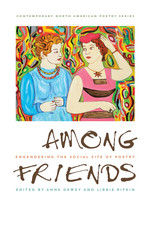 | Among Friends: Engendering the Social Site of Poetry
Anne Dewey and Libbie Rifkin
University of Iowa Press, 2013
Library of Congress PS323.v.A56 2013 | Dewey Decimal 811.5409353 Philosophers and theorists have long recognized both the subversive and the transformative possibilities of friendship, the intimacy of which can transcend the impersonality of such identity categories equally race, class, or gender. Unlike familial relations, friendships are called, opening a space of relative liberty in which to create and explore new identities. This process has been particularly valuable to poets marginalized by gender or sexuality since the 2d half of the twentieth century, as friendship provides both a buffer confronting and a wedge into predominantly male homosocial poetic communities. Among Friends presents a richly theorized evocation of friendship every bit a fluid, critical social infinite, one that offers a vantage point from which to explore the gendering of poetic institutions and practices from the postwar period to the present. With friendship as an optic, the essays in this book offer of import new insights into the gender politics of the poetic avant-garde, since verse as an institution has continued to be transformed past dramatic changes wrought past 2d-wave feminism, sexual liberation, and gay rights. These essays reveal the intimate social negotiations that fight, fracture, and queer the conventions of potency and community that take long constrained women poets and the gendering of poetic subjectivities. From this shared perspective, the essays collected here investigate a historically and aesthetically broad-ranging assortment of subjects: from Joanne Kyger and Philip Whalen'southward trans-Pacific friendship, to Patti Smith'due south grounding of her punk persona in the tension between her romantic friendships with male artists and her more professional connections to the poets of the St. Marking's scene, and from the gender dynamics of the Language School to the Flarf network's reconception of poetic customs in the digital historic period and the Black Took Commonage's creation of an intimate poetics of functioning. Together, these explorations of poetic friendship open up up new avenues for interrogating contemporary American verse. Contributors: Maria Damon, Andrew Epstein, Ross Hair, Duriel E. Harris, Daniel Kane, Dawn Lundy Martin, Peter Middleton, Linda Russo, Lytle Shaw, Ann Vickery, Barrett Watten, Ronaldo Five. Wilson Expand Description | 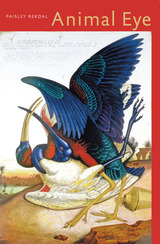 | Brute Eye
Paisley Rekdal
University of Pittsburgh Printing, 2012
Library of Congress PS3568.E54A85 2012 | Dewey Decimal 811.54 Voted ane of the five all-time poesy collections for 2012 by Publishers Weekly, Creature Eye employs pastoral motifs to engage a discourse on life and honey, as Coal Hill Review states "It is as if a scientist is at work in the basement of the museum of natural history, building a diorama of an entire ecosystem via words. She seem snot only interested in using the natural world equally a metaphoric lens in her poems but is set on edifice them detail past item into natural worlds themselves." Aggrandize Description | 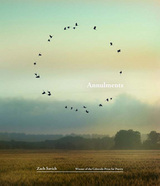 | Annulments
Zach Savich
University Press of Colorado, 2010
Library of Congress PS3619.A858A83 2010 | Dewey Decimal 811.6 Winner of the 2010 Colorado Prize for Poetry
Published by the Eye for Literary Publishing at Colorado State Academy Expand Description | 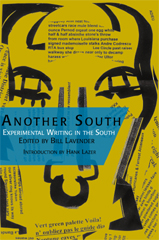 | Another South: Experimental Writing in the South
Edited by Pecker Lavender, with an introduction by Hank Lazer
University of Alabama Printing, 2002
Library of Congress PS551.A56 2003 | Dewey Decimal 811.6080110975 Some other Southward is an anthology of poesy from contemporary southern writers who are working in forms that are radical, innovative, and visionary. Highly experimental and challenging in nature, the verse in this volume, with its syntactical disjunctions, formal revolutions, and typographic playfulness, represents the direction of a new breed of southern writing that is at once universal in its appeal and regional in its flavor. Focusing on poets currently residing in the South, the album includes both emerging and established voices in the national and international literary world. From the invocations of Andy Young's "Vodou Headwashing Ceremony" to the blues-informed poems of Lorenzo Thomas and Honorée Jeffers, from the dissimilar voicings of )ohn Lowther and Kalamu ya Salaam to the visual, multi-genre art of Jake Drupe, David Thomas Roberts, and Bob Grumman, the poesy in Another South is rich in diverseness and enthusiastic in its explorations of new ways to embody identify and time. These writers accept made the South lush with a poetic avant-garde all its own, non simply redefining southern identity and voice but too offering new models of what is possible universally through the medium of poesy. Hank Lazer's introductory essay about "Kudzu textuality" contextualizes the work past these contemporary innovators. Like the uncontrollable runaway vine that entwines the southern landscape, their poems are hyperfertile, stretching their roots and shoots relentlessly, at once destructive and regenerative. In making a radical departure from nostalgic southern literary voices, these poems of polyvocal abundance are closer in spirit to "speaking in tongues" or apocalyptic southern folk fine art—primitive, astonishing, and mystic. Aggrandize Description |  | Antebellum American Women'due south Verse: A Rhetoric of Sentiment
Wendy Dasler Johnson
Southern Illinois University Printing, 2016
Library of Congress PS147.J64 2016 | Dewey Decimal 811.3099287 At a time when a woman speaking before a mixed-gender audition risked acquiring the label "promiscuous," thousands of women presented their views nearly social or moral problems through sentimental poetry, a blend of affect with intellect that immune their participation in public debate. Bridging literary and rhetorical histories, traditional and semiotic interpretations, Antebellum American Women's Verse: A Rhetoric of Sentiment explores an frequently overlooked, yet pregnant and persuasive pre–Ceremonious War American soapbox. Because the logos, ethos, and desolation—aims, writing personae, and audience appeal—of poems by African American abolitionist Frances Watkins Harper, working-course prophet Lydia Huntley Sigourney, and feminist socialite Julia Ward Howe, Wendy Dasler Johnson demonstrates that sentimental poetry was an inportant component of antebellum social activism. She articulates the ethos of the poems of Harper, who presents herself as a properly domestic black woman, notwithstanding stepping boldly into Northern pulpits to insist slavery be abolished; the poetry of Sigourney, whose speaker is a feisty, working-class, ambiguously gendered prophet; and the works of Howe, who juggles her fame as the reformist "Battle Hymn" lyricist and motherhood of five children with an erotic Continental sentimentalism. Antebellum American Women's Poetrymakes a potent instance for restoration of a compelling organization of persuasion through poetry normally dismissed from studies of rhetoric. This remarkable book will modify the way nosotros think virtually women's rhetoric in the nineteenth century, inviting readers to hear and respond to urgent, muffled appeals for justice in our own 24-hour interval. Expand Description |  | Anthems, Sonnets, and Chants: Recovering the African American Poetry of the 1930s
Jon Woodson
The Ohio State University Press, 2011
Library of Congress PS153.N5W66 2011 | Dewey Decimal 811.5209896073 In the 1930s African Americans faced three distinct historical crises that impacted the lives of African Americans straight—the Great Depression, the existential-identity crisis, and the Italo-Ethiopian War, with its threat of a race war. A sizeable torso of black poetry was produced in this decade, which captured the new modes of autonomy through which black Americans resisted these social calamities. Much of it, all the same, including the nearly influential protestation poems, was dismissed as "romantic" by major, leftist critics and anthologists. Anthems, Sonnets, and Chants: Recovering the African American Poetry of the 1930s, by Jon Woodson, uses social philology to unveil social discourse, self fashioning, and debates in poems gathered from anthologies, magazines, newspapers, and individual collections. The outset chapter examines 3 long poems, finding overarching jeremiadic discourse that inaugurated a militant, politically aware amanuensis. Chapter two examines self-fashioning in the numerous sonnets that responded to the new media of radio, newsreels, movies, and photo-magazines. The 3rd chapter shows how new subjectivities were generated by poetry addressed to the threat of race war in which the white race was exterminated. The black intellectuals who dominated the interpretative discourses of the 1930s fostered exteriority, while black culture as a whole plunged into interiority. Anthems, Sonnets, and Chants delineates the struggle between these inner and outer worlds, a study made difficult by a contemporary intellectual culture which recoils from a conventionalities in a consistent, integrated cocky. Expand Description |  | Aphrodite's Daughters: Three Modernist Poets of the Harlem Renaissance
Honey, Maureen
Rutgers University Press, 2016
Library of Congress PS310.N4H66 2016 | Dewey Decimal 811.5209928709 The Harlem Renaissance was a watershed moment for racial uplift, poetic innovation, sexual liberation, and female empowerment. Aphrodite's Daughters introduces us to three astonishing women who were at the forefront of all these developments, poetic iconoclasts who pioneered new and candidly erotic forms of female person cocky-expression. Maureen Honey paints a vivid portrait of three African American women—Angelina Weld Grimké, Gwendolyn B. Bennett, and Mae 5. Cowdery—who came from very dissimilar backgrounds but converged in tardily 1920s Harlem to leave a major marking on the literary landscape. She examines the varied ways these poets articulated female sexual desire, ranging from Grimké'south invocation of a Sapphic goddess figure to Cowdery'due south frank delineation of bisexual erotics to Bennett's risky exploration of the borders between sexual pleasure and hurting. Nonetheless Love likewise considers how they were united in their commitment to the female person body as a main source of meaning, force, and transcendence. The production of extensive archival research, Aphrodite'due south Daughters draws from Grimké, Bennett, and Cowdery's published and unpublished verse, along with rare periodicals and biographical materials, to immerse us in the lives of these remarkable women and the world in which they lived. It thus non only shows the states how their artistic contributions and cultural interventions were vital to their own era, but also demonstrates how the poetic heart of their piece of work keeps on beating. Aggrandize Description |  | Apocryphal Lorca: Translation, Parody, Kitsch
Jonathan Mayhew
University of Chicago Printing, 2009
Library of Congress PS159.S7M39 2009 Federico García Lorca (1898–1936) had enormous bear on on the generation of American poets who came of age during the cold war, from Robert Duncan and Allen Ginsberg to Robert Creeley and Jerome Rothenberg. In large numbers, these poets accept not simply translated his works, but written imitations, parodies, and pastiches—forth with essays and critical reviews. Jonathan Mayhew's Apocryphal Lorca is an exploration of the afterlife of this legendary Castilian writer in the poetic culture of the United States. The book examines how Lorca in English translation has become a specifically American poet, adjusted to American cultural and ideological desiderata—one that bears little resemblance to the original corpus, or even to Lorca's Spanish legacy. As Mayhew assesses Lorca's considerable influence on the American literary scene of the latter half of the twentieth century, he uncovers fundamental truths well-nigh contemporary poetry, the uses and abuses of translation, and Lorca himself. Expand Description |  | Are You Experienced? Baby Smash Poets At Midlife
Pamela Gemin
Academy of Iowa Press, 2003
Library of Congress PS595.B25A74 2003 | Dewey Decimal 811.5408 In this timely and reflective album, the generation that sought to stay forever immature reveals that midlife should mean more than jokes virtually thinning hair, creaking joints, and thickening waistlines. Midlife's insights—whether they be physical, spiritual, or emotional—are indeed startling, and who improve than poets to deliver them? Expand Description |  | The Arrival
Daniel Simko
Four Way Books, 2009
Library of Congress PR9170.S563S56 2009 | Dewey Decimal 821.92 Poet and translator Daniel Simko emigrated with his parents to the United statesA. and lived here until his death, aged 45, in 2004. Steeped in the traditions of European art, Simko remained reticent about publishing. Thanks to his literary executor, Carolyn Forché, this offset collection, in the language Simko grew up into, showcases his souvenir for the unexpected, exact phrase. The Arrival maps a haunting choreography of travel, memory, and the body so gently you volition experience you have been carrying this book around with y'all all forth. Expand Description |  | Articulations: The Body and Illness in Poetry
Jon Mukand
University of Iowa Press, 1994
Library of Congress PS595.C37A78 1994 | Dewey Decimal 811.54080920824 In 1987 poet and doc Jon Mukand published Sutured Words, a book of contemporary poems to help patients, their families and friends, and all health care professionals embrace the complexity of healing, illness, and death. Robert Coles called the drove "a wonderful source of inspiration and didactics for any of usa who are trying to figure out what our work means"; Norman Cousins was impressed by the "discernment and high quality of the selections." At present, in Articulations, Mukand adds more a hundred new poems to the strongest poems from Sutured Words to give the states a lyrical, enlightened agreement of the human being dimensions of suffering and disease Expand Description |  | Asian American Poetry: THE NEXT GENERATION
Edited by Victoria 1000. Chang
University of Illinois Press, 2004
Library of Congress PS591.A76A83 2004 | Dewey Decimal 811.6080895 This volume is the commencement in English to consider women's movements and feminist discourses in twentieth-century Taiwan. Doris T. Chang examines the fashion in which Taiwanese women in the twentieth century selectively appropriated Western feminist theories to meet their needs in a modernizing Confucian culture. She illustrates the rise and fall of women'south movements against the historical backdrop of the island's contested national identities, first vis-à-vis imperial Japan (1895-1945) and later with postwar Red china (1945-2000). In particular, during periods of soft authoritarianism in the Japanese colonial era and late twentieth century, autonomous women'due south movements emerged and operated within the political perimeters set by the disciplinarian regimes. Women strove to replace the "Good Wife, Wise Mother" platonic with an individualist feminism that meshed social, political, and economic gender equity with the prevailing Confucian family ideology. Nonetheless, during periods of hard authoritarianism from the 1930s to the 1960s, the autonomous movements collapsed. The detail brand of Taiwanese feminism adult from numerous outside influences, including interactions amid an East Asian sociopolitical milieu, diverse strands of Western feminism, and Marxist-Leninist women'due south liberation programs in Soviet Russia. Chinese communism appears not to have played a significant office, due to the Chinese Nationalists' restriction of communication with the mainland during their rule on post-Globe War Ii Taiwan. Notably, this study compares the perspectives of Madame Chiang Kai-shek, whose husband led as the president of the Republic of Mainland china on Taiwan from 1949 to 1975, and Hsiu-lien Annette Lu, Taiwan's vice president from 2000 to 2008. Delving into flow sources such as the highly influential feminist monthly mag Awakening likewise equally interviews with feminist leaders, Chang provides a comprehensive historical and cross-cultural analysis of the struggle for gender equality in Taiwan. Aggrandize Clarification |  | Aviary: Improvisations on John Clare
Lola Haskins
Academy of Pittsburgh Press, 2019 Dewey Decimal 811.54 Asylum presents the kind of journey John Clare might take taken in 1841 if, when he escaped the madhouse, he'd been traveling in his head rather than on his feet. Lola Haskins starts out with as little sense of direction equally Clare had, and yet, afterward wandering all over the map, she likewise finally reaches her destination. The four sections in this book are where she rests for the night. The beginning looks tenderly at the cycle of human life. The second renders the world effectually her every bit if she were painting it. By the third, having lost her way, she turns to the supernatural and in the procedure is sometimes express joy-out-loud funny. The volume ends as she finds it once more and arrives in her dear north-west England, having learned from John Clare that she "can be homeless at dwelling and half-gratified to find I can be happy anywhere." Expand Description |  | At the Brink of Infinity: Poetic Humility in Boundless American Space
James E. von der Heydt
University of Iowa Press, 2008
Library of Congress PS310.V57V66 2008 | Dewey Decimal 811.00922 From popular civilization to politics to classic novels, quintessentially American texts take their inspiration from the idea of infinity. In the boggling literary century inaugurated by Ralph Waldo Emerson, the lyric too seemed to encounter possibilities equally limitless as the U.Southward. imagination. This raises the question: What happens when boundlessness is more than than simply a figure of speech? Exploring new horizons is ane thing, merely really looking at the horizon itself is something altogether different. In this carefully crafted assay, James von der Heydt shines a new light on the lyric craft of Emily Dickinson, Robert Frost, Elizabeth Bishop, and James Merrill and considers how their seascape-vision redefines poetry's purpose. Emerson famously freed U.Due south. literature from its past and opened information technology upwards to vastness; in the following century, a succession of brilliant, rigorous poets took the philosophical challenges of such liberty all likewise seriously. Facing the unmarked horizon, Emersonian poets capture—and are captured by—a stark, severe version of man beauty. Their uncompromising visions of limitlessness reclaim infinity's proper legacy—and give American poetry its edge. Von der Heydt's book recovers the mystery of their world. Aggrandize Clarification | 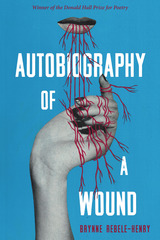 | Autobiography of a Wound
Brynne Rebele-Henry
University of Pittsburgh Printing, 2018
Library of Congress PS3618.E335A6 2018 | Dewey Decimal 811.half dozen Winner of the AWP 2017 Donald Hall Prize for Verse In aboriginal fertility carvings, artists would drill holes into the woman'due south torso to signify penetrability, which is the basis of Autobiography of a Wound: allowing those wounds and puncture marks to speak through the fertility figures. The wounds are chronicled through messages and poems addressed to F (F stands for the fertility carvings themselves, which are beingness addressed as one unified deity), and A (Aphrodite, who is being referenced equally a full general deity of womanhood, a figurine that reappears throughout the poems, and a symbol that is referenced or portrayed in about every fertility figurine or etching). Autobiography of a Wound reconstructs the narrative surrounding female pathos and the idea of the hysteric girl. Aggrandize Clarification | | |

0 Response to "Twentiethcentury American Poetics Poets on the Art of Poetry Find in Library"
Enregistrer un commentaire